Tuesday, 2 July 2019

What is appendicitis ? | causes, symptoms, and treatment | 2019

APPENDICITIS

Hello everyone 

Today's blog is all about appendicitis. The appendix is a small pouch(finger shaped) situated at the lower right side of the abdomen( Right iliac region). The exact location of the appendix is at the junction of the small intestine and large intestine.
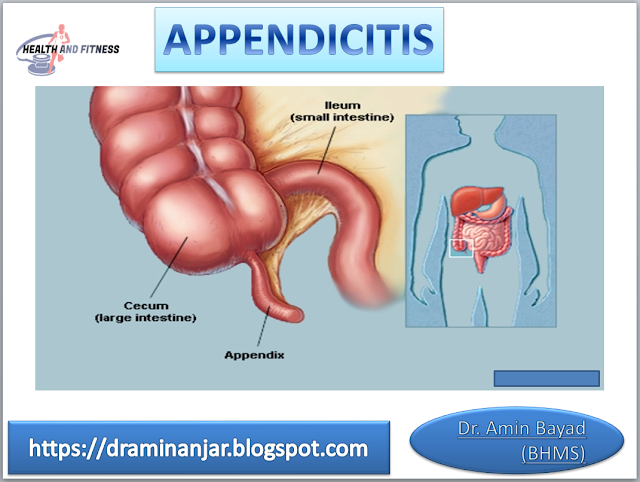


location of appendicitis


The function of the appendix is still in doubt that some scientists believe that appendix is the storehouse of good bacteria that release after the attack of diarrhea but some scientists say that there is no any function of the appendix and its useless part of our body.

Definition of Appendicitis 


Appendicitis is defined as inflammation of the appendix. One should always know that appendicitis is a medical emergency if untreated than it will burst or rupture and spread infection in the abdomen. This can lead to inflammation of the peritoneum(peritonitis)and that can be fatal and need emergency treatment with higher antibiotics.

CAUSES OF APPENDICITIS 


Thre exact define cause of appendicitis is unknown some scientists believe that there is an obstruction of appendix lead to form infection inside and become swollen and painful.

Obstruction of appendix leads to multiplying of bacteria and the formation of pus and swelling occur. So because of the formation of pus sever pain starts at the lower right abdomen.


SYMPTOMS OF APPENDICITIS 


Classical symptoms of appendicitis 
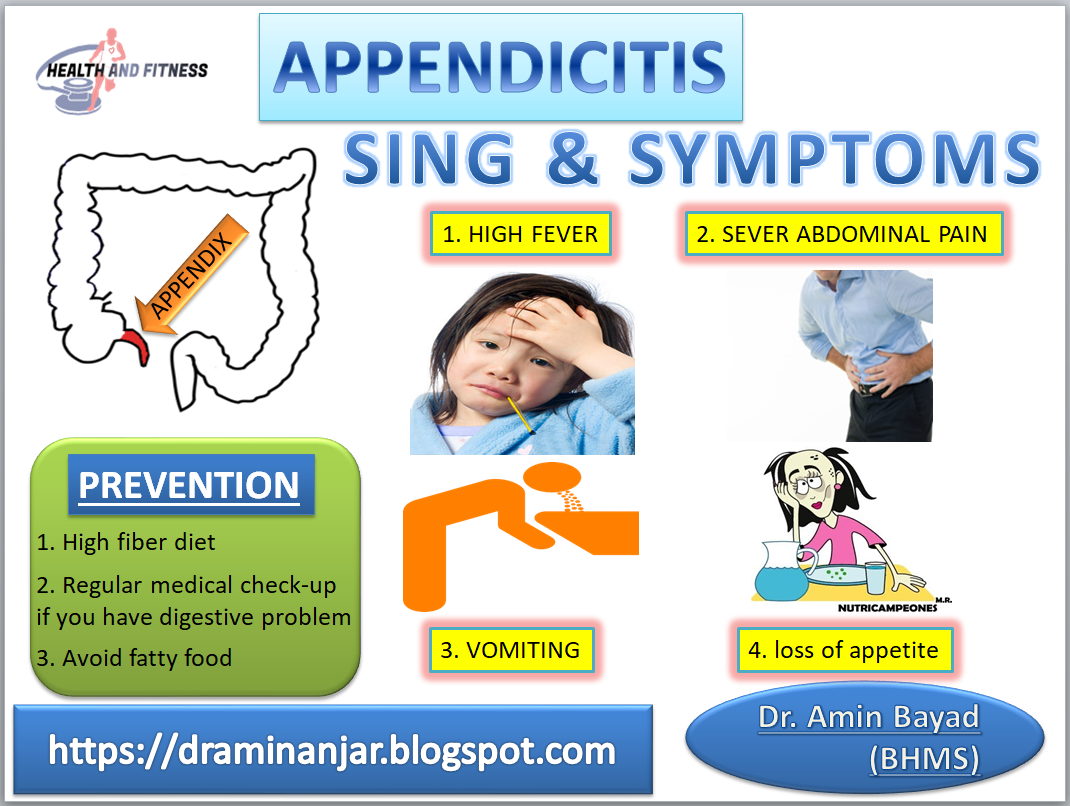
  1. Initially pain at the upper abdomen later pain shift to the lower abdomen and become severe.
  2. loss of appetite
  3. vomiting/nausea
  4. fever
  5. cramps
  6. constipation or diarrhea 


Symptoms, prevention, and location of appendicitis

DIAGNOSIS OF APPENDICITIS 


The abdomen has lots of organ in it and all are important for body function so, on the basis of abdominal pain, there is lots of reason or etiology are suspected there for diagnosis of appendicitis is tricky. Your doctor may advise below investigation to rule out the exact cause of abdominal pain.


  • Abdominal examination for tenderness and inflammation
  • Urine test
  • Rectal examination
  • Complete blood count
  • USG of abdomen 
  • CT-scan

DIFFERENTIAL DIAGNOSIS OF ABDOMEN

  1. Urinary tract infection
  2. Gastroenteritis
  3. Urolithiasis
  4. Ectopic pregnancy
  5. crohn's disease 

TREATMENT OF APPENDICITIS


Line of treatment is varying according to the severity of appendicitis. The physician may recommend the following line of treatment. 
  • Liquid diet
  • Analgesic
  • Antibiotics
  • IV- fluids
  • Needle drainage of abscess
  • Surgical removal of the appendix (Appendectomy) 

In most of the case of appendicitis, the physician advises for surgical removal of the appendix for safe side.

Appendectomy is the best option for appendicitis rather than antibiotics therapy. There are two types of the surgical procedure are available for an appendectomy.

1. Open surgery:- In this type of surgery surgeon can incise abdomen about 2 to 4 inch at McBurney's point to remove the appendix. 

2. Laparoscopic surgery:- In laparoscopic surgery surgeon can incise a few small opening in the abdomen and insert a very small robotic line with a camera and remove the appendix. This minimum invasive surgery can fasten the recovery so nowadays all the surgeon recommended laparoscopic surgery.

COMPLICATION OF APPENDICITIS


1. Peritonitis:- If untreated than appendix may rupture and releases the pus in the abdominal cavity, that leads to infection of peritoneum( peritonitis)

2. Perforation
3. Appendicular Abcsess
4. Surgical wound infection


DR. AMIN BAYAD
(BHMS)


Saturday, 15 June 2019

What is URTI ? | Symptoms and treatment | 2019

HI EVERYONE hopes you all are well. today's topic is a very common problem of everyone that is cold, so here I m presenting you a blog about upper respiratory tract infection in simple and short form hope you will get benefits from this blog and please share and comments your opinion.


UPPER RESPIRATORY TRACT INFECTION


Upper respiratory tract infection is the most common infection in OPD and most common transmission of URTI is through inhalation and direct contact.

The virus is the commonest etiology of URTI but bacterial infection also causes URTI.


types of URTI

There are Four (4) type of Upper respiratory tract infection.

1) COMMON COLD & INFLUENZA


Common cold and influenza caused by a virus and it's most common in URTI. Influenza means a severe form of the common cold caused by the influenza virus. There is a new virus which is taken in the form of pandemic (swine flu).

The virus that is causing common cold infection.

1) Influenza virus
2) Picornaviruses
3) Respiratory syncytial virus
4) Parainfluenza virus
5) Adenovirus

Clinical feature: - Sing and symptoms

  • Sneezing, rhinorrhoea, nasal congestion
  • Sore throat
  • Non-productive cough
  • Headache and pain in the eye
  • Fever
  • Conjunctivitis, laryngitis
  • Skin rash
  • Postnasal discharge
  • Erythema around nose
  • Pharynx congested
  • Tonsillitis
  • Lymph node enlarges and tender


Diagnosis

  1. Nasal pharyngeal swab
  2. Throat swab
  3. Real-time polymerase chain reaction
  4. Culture test


Management

The common cold is usually treated by symptomatic and supportive treatment
Bed rest and adequate fluid
  • Anti-cholinergic spray (ipratropium)
  • Nasal decongested (xylometazoline)
  • Saline nasal drop
  • In the case of influenza
  • The household spread of disease should be controlled
  • Isolation of pt. in well ventilated isolation room
  • Anti-viral drug e.g. Oseltamivir should start to treat and prevent severe illness
  • Anti-viral prophylaxis should be provided to a health care professional

  • Supportive therapy
  1. Intravenous fluid
  2. Parenteral nutrition
  3. Oxygen therapy
  4. Ventilator support ( if need)
  5. Anti-biotic for secondary infection
  6. Vasopressor for shock
  7. Aspirin and salicylate medication is contraindicated in influenza(Reyes syndrome)
  8. Pt. should monitor for secondary bacterial infection


2)RHINITIS

Rhinitis is defined as inflammation of the membranous lining of the nose.

There are two types of rhinitis
  1. Allergic rhinitis
  2. Non allergic rhinitis


1) Allergic rhinitis is occurring when contact allergen and due to contact of allergen there will be an inflammation of the membranous lining of the nose. Inflammation is due to immunoglobulin E mediate.

After exposed to allergen pt. has symptoms of sneezing, itching, clear rhinorrhoea, nasal congestion, obstruction appears after 4 to 6 hour of exposure.

The main cause of acute infectious rhinitis is a virus. If acute infectious rhinitis is not treated then there will be an increasing chance of secondary bacterial infection in which pt. have mucopurulent nasal discharge, facial pain and fever may present.

2)Nonallergic rhinitis is inflammation of the inner part of the nose that is not caused by an allergen and without infection

Sing and symptoms are as follow
  • Nasal obstruction
  • Rhinorrhoea
  • Exacerbated by certain alcohol, spicy food and emotion.
  • Environmental factor such as temperature, barometric pressure, bright light can aggravate


MANAGEMENT
  1. Anti-histamine for itching and sneezing (cetirizine/fexofenadine)
  2. Corticosteroids
  3. WHO recommended using a combination of anti-histamine and anti-leukotriene
  4. Topical corticosteroids (such as budesonide, mometasone and beclomethasone provide relief to pt.
  5. Rhinorrhoea relieving drug may cause sedation due to systemic absorption.


3)Pharyngitis

Pharyngitis is inflammation of the pharynx, hypopharynx, uvula, and tonsil due to virology. Pharyngitis caused by a group of Alfa-beta hemolytic streptococci. Most common in children (4 to 6 years)

Clinical feature
  1. Throat discomfort
  2. Odynophagia
  3. Cough
  4. Fever, headache, malaise, and myalgia
  5. Tonsillopharyngeal erythema
  6. Foul smelling
  7. Swollen and tender cervical lymph node
  8. Conjunctivitis and maculopapular rash


Diagnosis: -  Throat swab culture reviled the viral infection or bacterial. Serological test also help.

MANAGEMENT
  • Viral pharyngitis is self-limiting diseases which resolve spontaneously.
  • Anti-viral may require in some case
  • Symptomatic treatment

4)SINUSITIS

Sinusitis is defined as inflammation of Paranasal sinuses

CAUSES OF SINUSITIS
  1. Anatomic abnormalities of osteomas complex(e.g. deviated nasal septum, concha bullosa, and bone spurs)
  2. Allergic rhinitis
  3. Nasal polyps
  4. Nasotracheal, nasogastric intubation
  5. Tumour causing obstruction
  6. Dental surgery
  7. Recurrent URTI
  8. Cystic fibrosis
  9. Tobacco smoking


Clinical feature
  • Symptoms of sinusitis are frequent and persistence even after the common cold subsides.
  • Nasal congestion
  • Headache fever
  • Facial pain
  • Headache is increasing when bending forward
  • In chronic sinusitis pain and fever are rarely present
  • Nasal obstruction, purulent nasal discharge, postnasal drip
  • Chronic cough


Diagnosis of sinusitis
  1. Nasal Endoscopy
  2. Radiography of Paranasal sinus
  3. CT scan


Management of sinusitis
  • Controlling of predisposing factor
  • Symptomatic treatment
  • Antibiotic
  • Nasal decongestant(xylometazoline)
  • Surgery is recommended for chronic sinusitis, recurrent sinusitis, large obstructive polyp, and tumor.
DR. AMIN BAYAD
BHMS